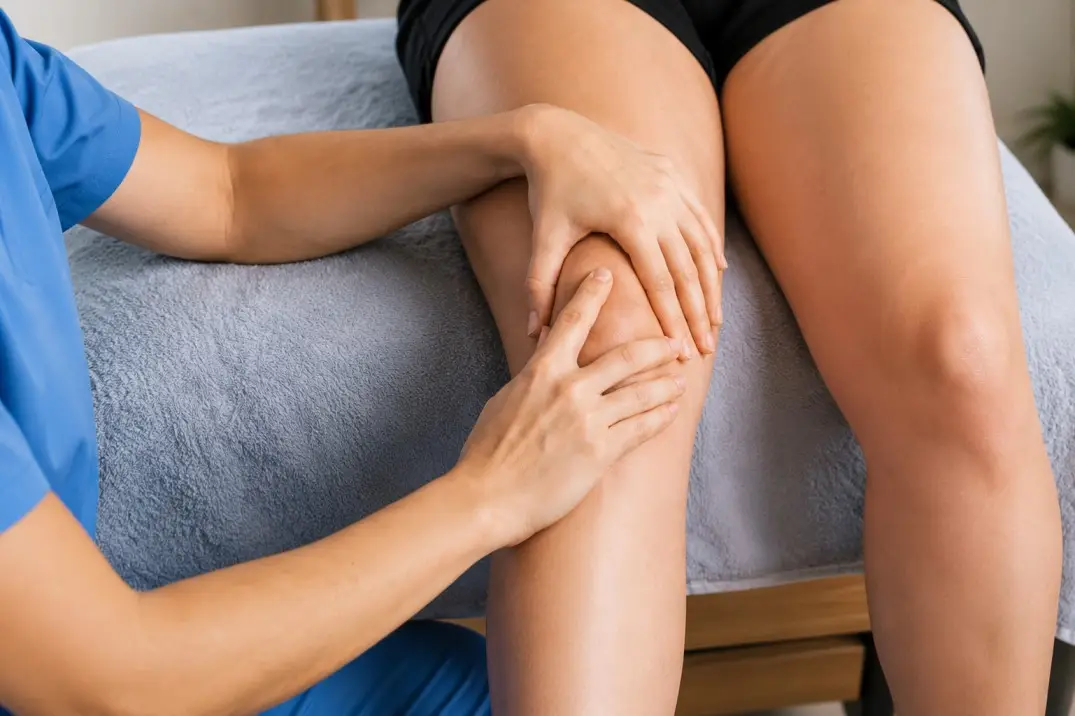
Knee pain due to Osteoarthritis is one of the most common problems, especially in middle-aged and elderly individuals. While many fear surgery, effective non-surgical management is possible.
What Happens in Osteoarthritis?
In osteoarthritis:
- Joint cartilage gradually wears out
- Bones experience increased friction
- Inflammation leads to pain and stiffness
This results in difficulty in walking, climbing stairs, or standing for long periods.
Common Symptoms
- Knee pain during activity
- Morning stiffness
- Swelling around the joint
- Reduced range of motion
Why Rest Alone is Not the Solution
Complete rest may reduce pain temporarily, but it leads to:
Movement is essential—but it must be controlled and guided.
How Physiotherapy Helps
- Strengthening Muscles Around the Knee
Strong muscles reduce stress on the joint. - Improving Joint Mobility
Maintaining flexibility reduces stiffness. - Gait Training
Correct walking patterns reduce load on the knee. - Activity Modification
Adapting daily activities to reduce strain.
Long-Term Management Strategy
- Regular exercise routine
- Weight management
- Proper footwear
- Avoiding high-impact activities
Final Takeaway
Osteoarthritis does not always mean surgery.
With the right physiotherapy approach, you can manage pain, improve mobility, and maintain an active lifestyle.